Doc-Cirrus stitches partners. circleOS ships one product.
Doc-Cirrus is a 2012 platform that reaches modern features through outside-vendor integrations. circleOS is what an all-in-one looks like when it's built AI-native from day one — Plans, Charge, briefings, notes and a real Patient Portal, all from one understanding of the patient.
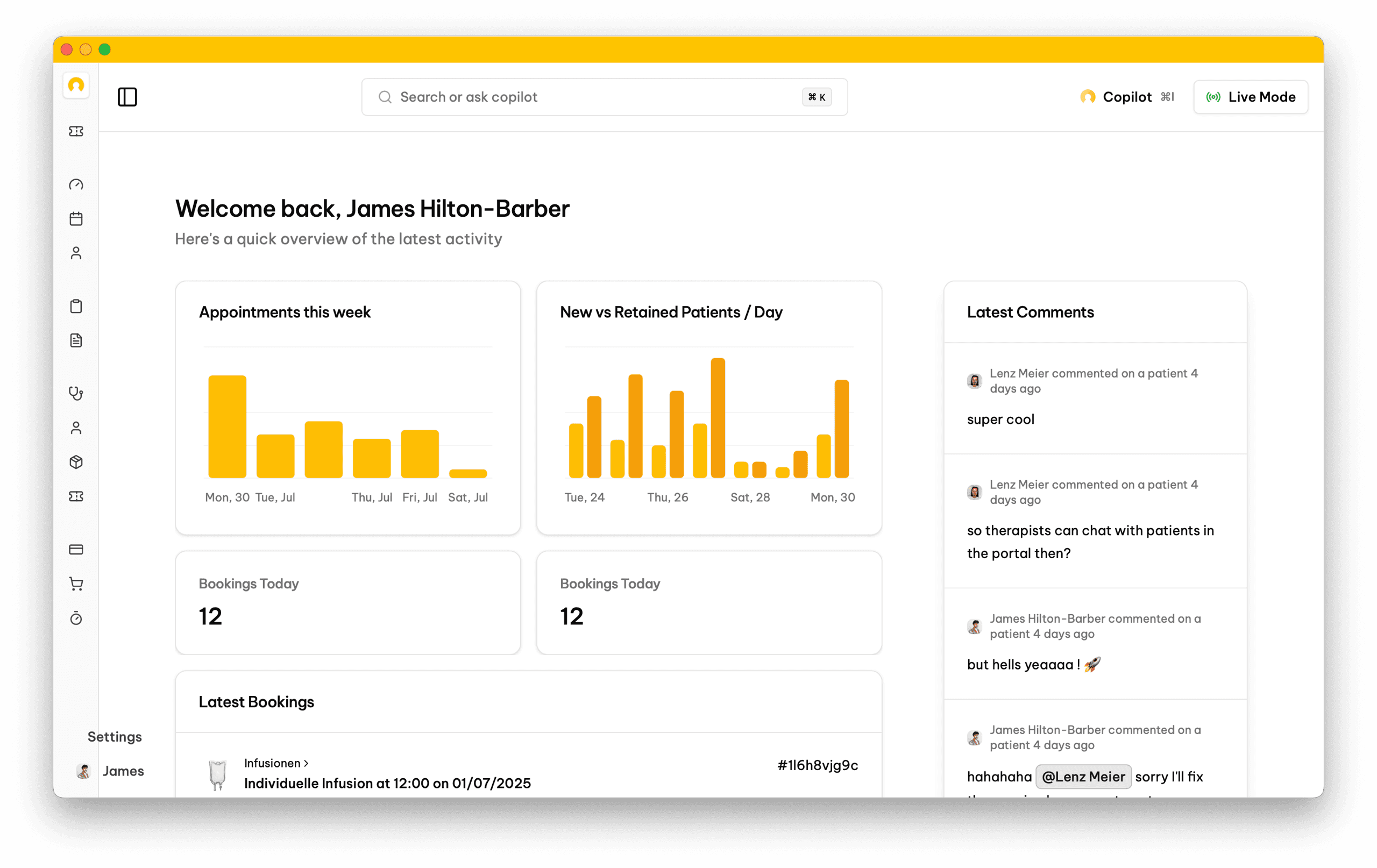
One product, not a stack of partners.
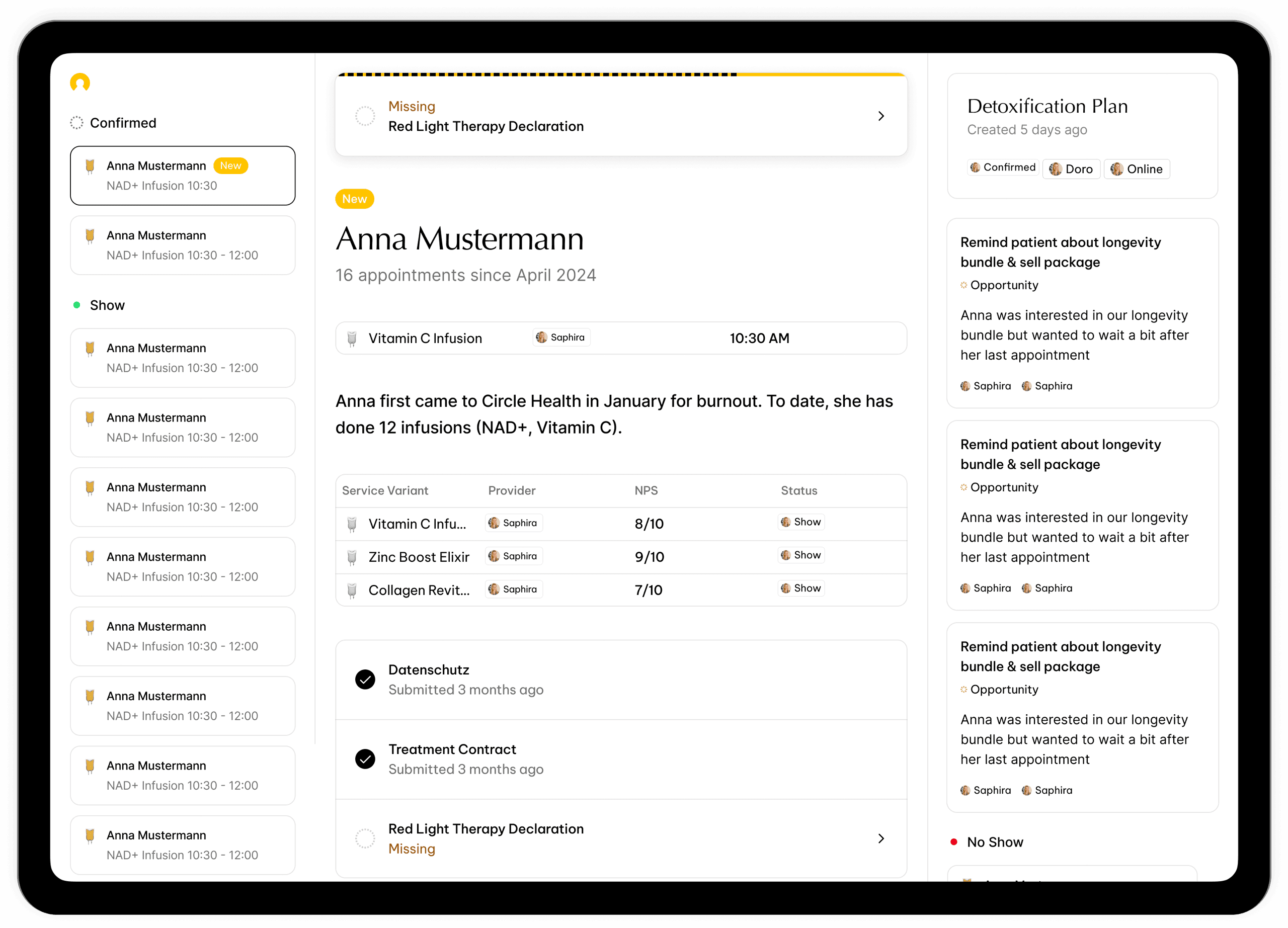
Doc-Cirrus reaches modern features by integrating outside vendors — AI scribe from one company, digital anamnesis from another, on top of the practice software itself. Three roadmaps, three contracts, and a stitched seam wherever they meet. Circle Intelligenceis one model that sees the schedule, the visit, the plan and the invoice — so a note already knows what plan it relates to, and a briefing already knows what's outstanding.
Recurring care, properly priced.
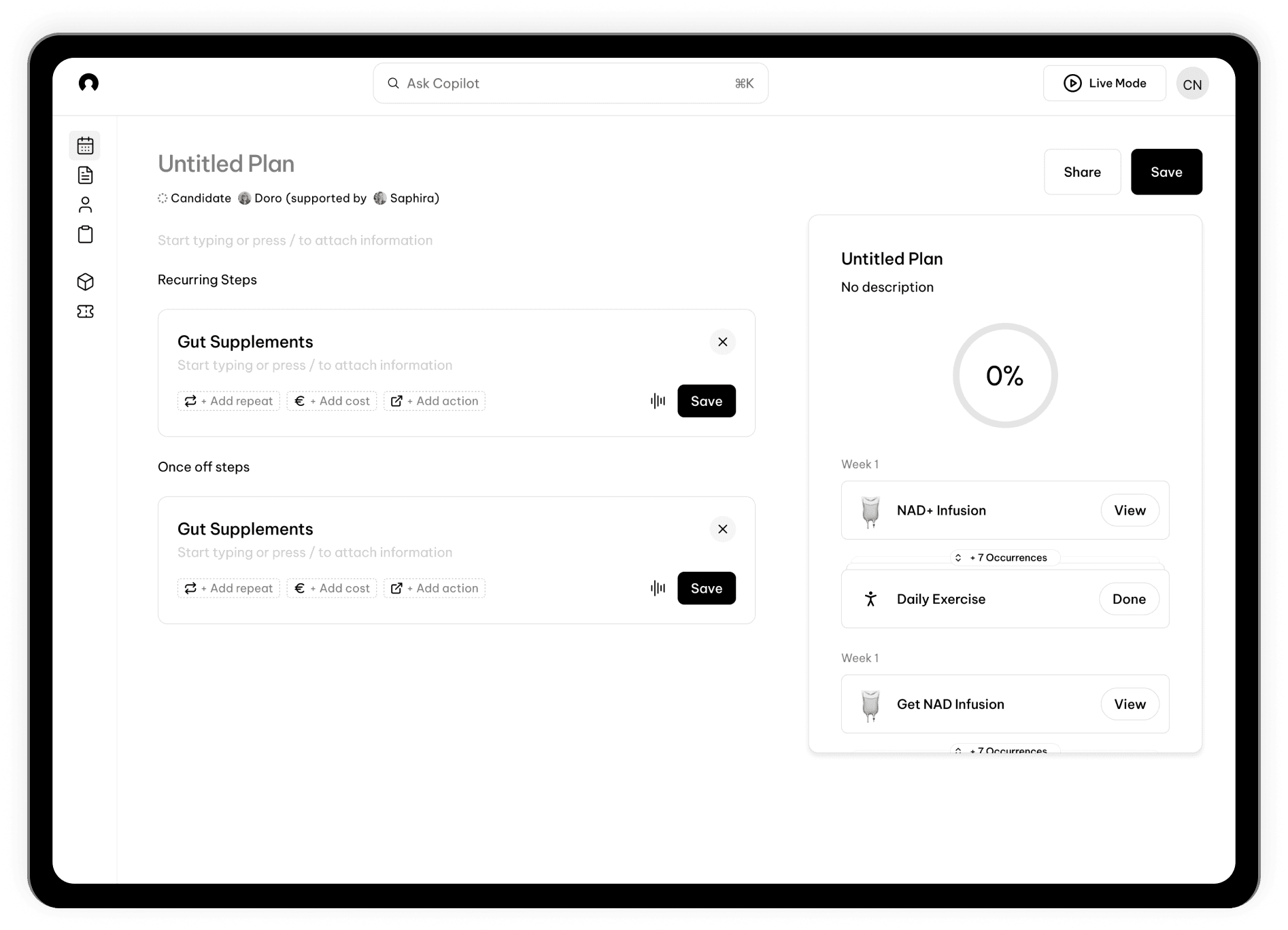
Doc-Cirrus tracks appointments — one at a time, like every PMS built in the 2010s. Plans price six visits across three providers as one thing the patient bought, and Chargereconciles each appointment against it. No spreadsheet to track who's on session four of six.
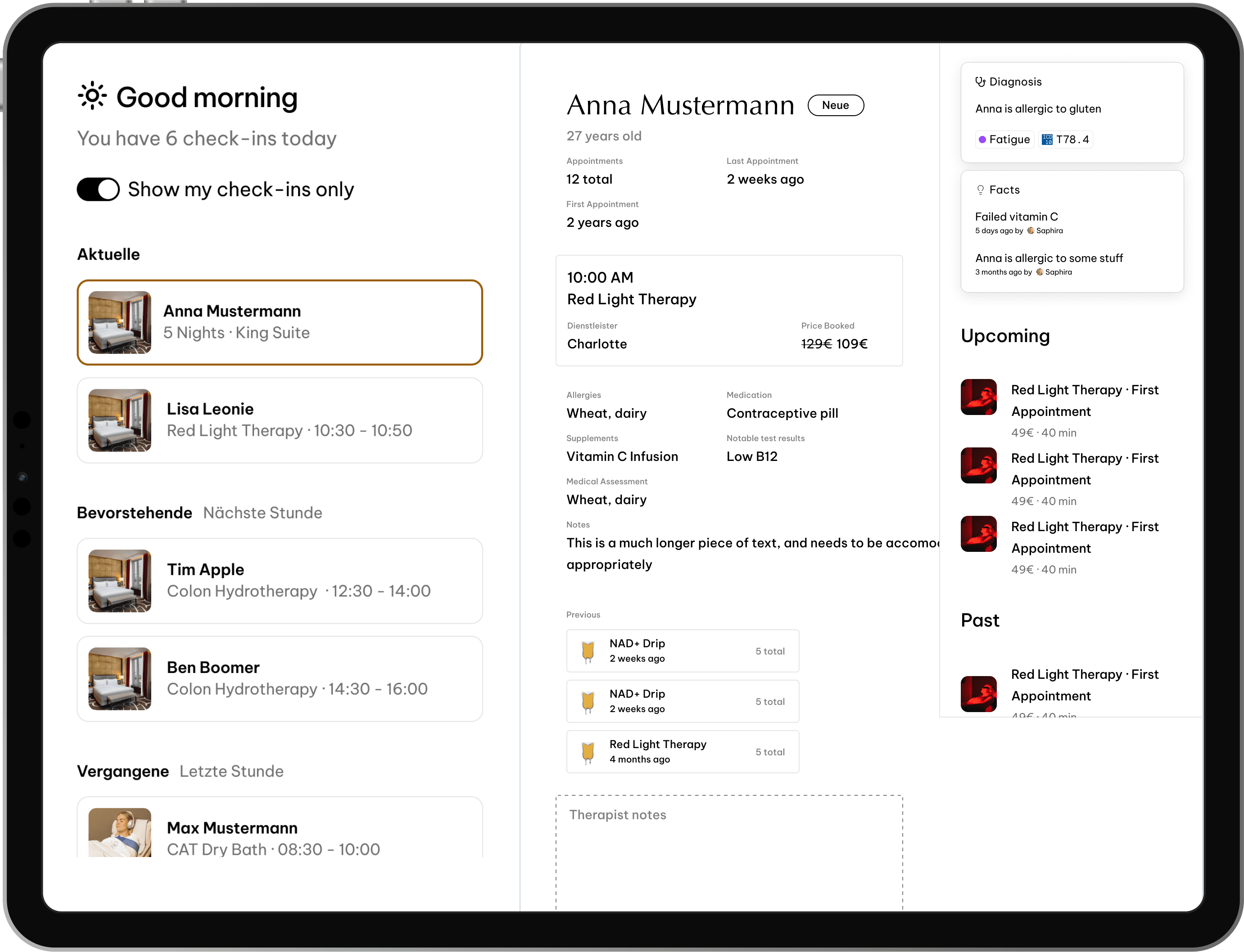
Briefings before the visit, not just notes after.
A scribe joins when the consult starts. Tomorrow's twenty patients are already on tomorrow's calendar — and circleOS has already prepared a briefing for each of them. Last visit, plan progress, outstanding items, relevant history.  Live Mode shows the day with a briefing on every appointment, ready when the clinician opens it at 8am.
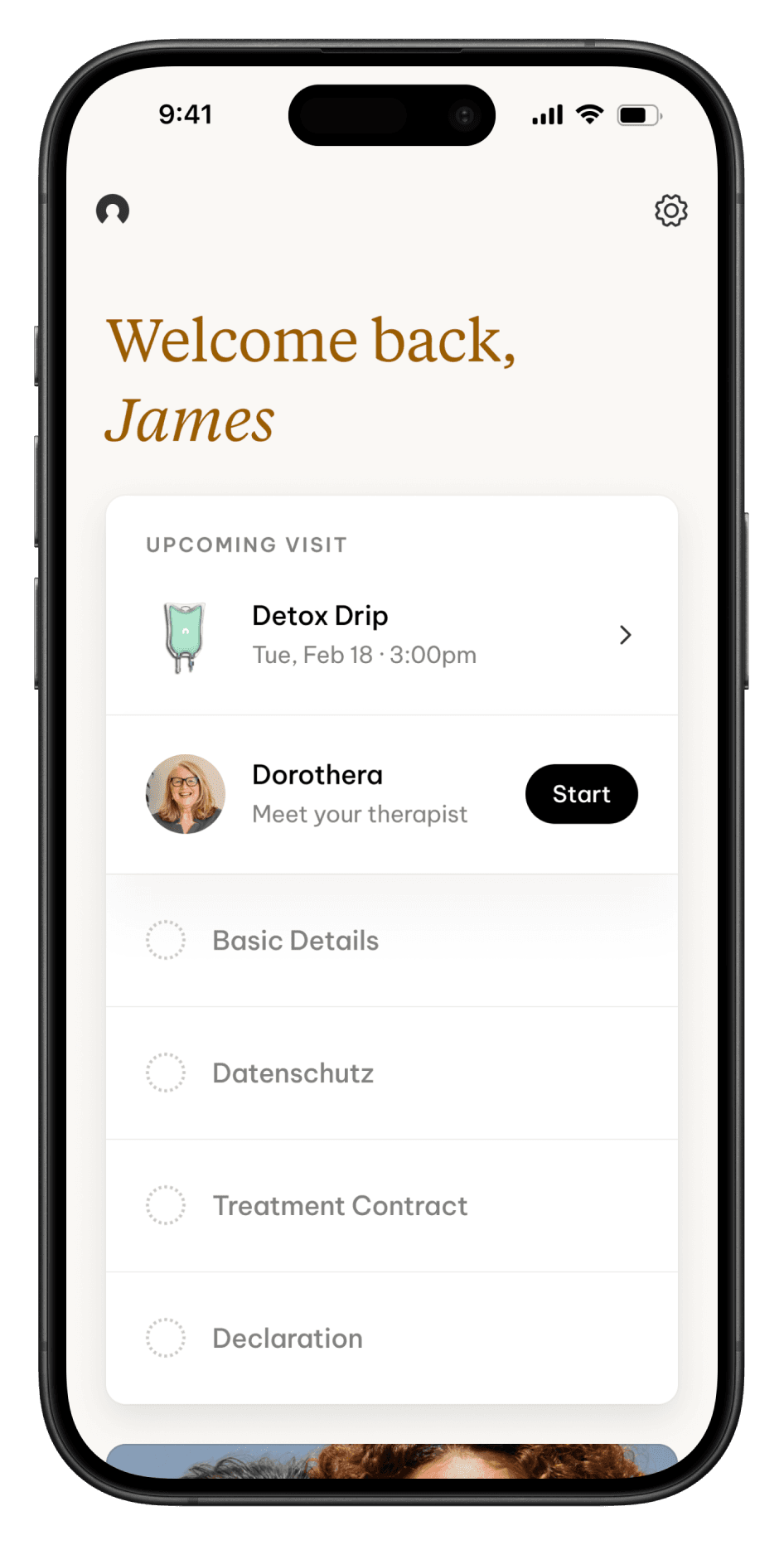
An app patients open. Not a portal they email about.
Doc-Cirrus' patient touchpoint is a web portal bolted onto the practice software. Patients reach the front desk by phone or email first; the portal second. The  Patient Portalflips that: bookings, plans, invoices and documents on the patient's phone, with notifications. The front desk inbox shrinks accordingly.
Software that ships weekly, not on a 2014 cadence.
KBV and TÜV are table stakes — both products clear them. The difference shows up in the small things: how many clicks to book a recurring appointment, how the keyboard shortcuts work, how fast new AI capabilities reach your clinic. Doc-Cirrus ships modules on top of a 2012 base. circleOS ships an operating system that gets meaningfully better every quarter.
Honest, side-by-side
How circleOS compares to Doc-Cirrus.
Doc-Cirrus covers the German regulatory bases by stitching outside vendors onto a 2012 platform. circleOS is what an all-in-one looks like when it's one product, designed AI-native from day one — not a partnership stack.
| Capability | circleOSOperating system | Doc-CirrusLegacy KBV-cert PMS | Eterno CloudAll-in-one cloud + GenAI | NellyIntake + AI docs + payments | Tandem HealthAI scribe + EMR connectors | Heidi HealthAI ambient scribe |
|---|---|---|---|---|---|---|
Online patient bookingPatient-facing self-scheduling. | Supported | Supported | Supported | Not supportedActivates after booking elsewhere | Not supported | Not supported |
Multi-disciplinary schedulingRosters across providers, rooms and locations. | Supported | SupportedResource planning | Supported | Not supported | Not supported | Not supported |
Recurring care plansMulti-session care priced & tracked as one object. | Supported | Not supported | Not supported | PartialAI Treatment Plan Agent | Not supported | Not supported |
AI-assisted clinical notesAmbient/voice → structured documentation. | Supported | Via integrationviaVia Tandem partnership | Supported | Supported | SupportedTheir core product | SupportedTheir core product |
AI pre-visit briefingsPer-patient context generated before the consult. | Supported | Not supported | Not supported | Not supported | Not supported | Not supported |
Digital intake formsPatient-completed anamnesis, multi-language. | Supported | Via integrationviaVia Nelly Connect | Supported | Supported50+ languages — their core | Not supported | PartialForm-fill, not patient-facing |
Invoicing & paymentsVisit → invoice → paid. | Supported | SupportedEBM/GOÄ/HzV | Supported | SupportedPlus patient financing | PartialSuggests codes only | Not supported |
Real patient appPatients manage bookings, plans, invoices, documents. | Supported | PartialWeb portal | PartialPatient files / portal | PartialWeb portal, intake-led | Not supported | Not supported |
Multi-location & rolesSites, teams, role-based permissions. | Supported | Supported | Supported | Supported700+ Colosseum Dental sites | Partial | Partial |
AI-native architectureBuilt around AI from day one, not retrofitted. | Supported | Not supportedAI bolted onto 2012 platform | Partial | Partial | Supported | Supported |
GDPR + DE/EU residencyPatient data resident in the EU. | Supported | SupportedDE, ISO 27001 | SupportedCertified DE cloud | SupportedAWS Frankfurt, TÜV | SupportedEU data centres | PartialAU HQ, global hosting |
Webhooks & public APIBuild on top of the platform. | Supported | Not supportedPartner integrations only | Not supportedNot publicly documented | PartialPMS Connector | Partial100+ EHR integrations | SupportedPublic roadmap |
Comparison reflects publicly documented capabilities as of May 2026. Competitor products evolve fast — corrections welcome at peter@circle.health.
Built for clinics that have grown
Multi-location, multi-role, multi-everything.
Sites in three cities, a finance team that needs a real reporting layer, a developer team that wants webhooks. circleOS scales with you.
Multiple Locations
BetaOffer services at multiple locations.
Roles & Permissions
v0.0.9Granular permissions to control who accesses what.
Rich Analytics
v0.1.5circleOS integrates with Metabase to enable you to build custom reports on top of your data.
Webhooks
BetacircleOS emits events such as `booking.created` → use them.
We didn't reinvent these
Powered by industry-leading tech.
Stripe handles money. InSuite handles clinical billing. Fillout handles forms. circleOS is the layer that ties them to a patient.
 InSuiteLaunched
Invoice sync, status refresh, and checkout handoff for billing.
 FrontLaunched
Create patients from conversations and open the linked profile in context.
 Filloutv0.1.2
Build forms via Fillout & have them show up in circleOS.
 Metabasev0.0.1
Configure dashboards via Metabase & view them in circleOS.
 Slackv0.0.1
Notifications for key events in Slack.
 Knockv0.0.1
Powerful notification infrastructure.
 Typesensev0.0.9
Typo-tolerant global search engine.
 Medusav0.1.2
Commerce & inventory features.
 Langdockv0.0.1
Powers Circle Intelligence & other AI features.
 Stripev0.0.9
Use Stripe as a payment provider for online checkout.
 Mixpanelv0.0.1
Server-side, event-driven analytics.
 Supabasev0.0.1
Database and authentication.
Thinking about a switch?
Peter (CEO) will walk you through how circleOS would fit your clinic and what a migration would actually look like. Thirty minutes, no slides.
Explore the rest of circleOS
Patient Portal
v0.1.9Extend beyond your walls & opening hours.
Onboarding
v0.1.2Meet your patients, before you see them.
Scheduling
v0.1.9Schedule. Reschedule. Repeat.
Live Mode
v0.1.0The important stuff, front and centre.
Circle Intelligence
v0.0.9Your contextually-aware clinical assistant.
Notes
v0.1.2Living, breathing, context aware.