
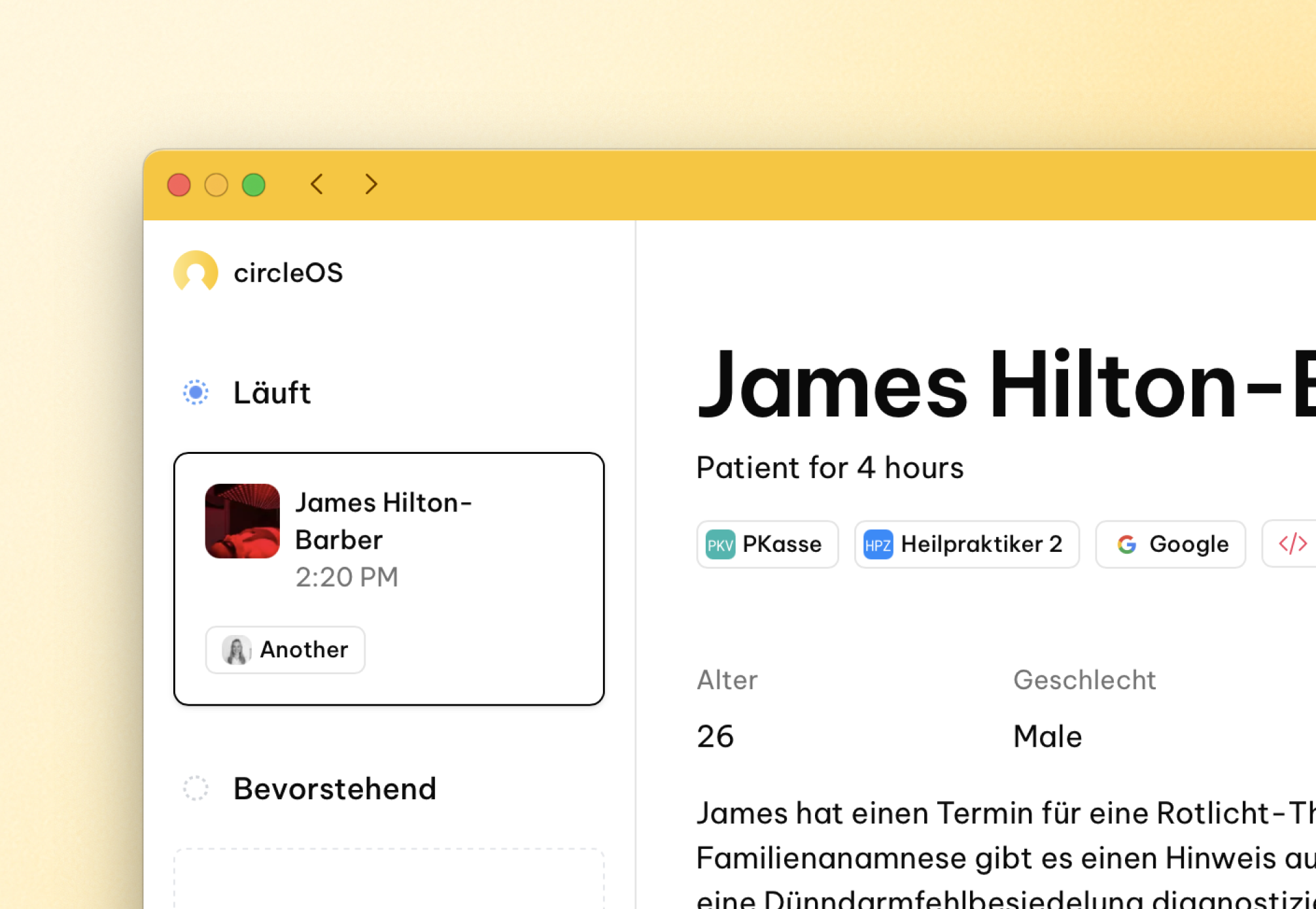
circleOS stores insurance as one or more plans linked to a patient. Each plan connects to an insurance provider, and each provider has a type: state, private, or supplementary.
A patient can have multiple plans at the same time. In the day-to-day patient summary, circleOS lists every linked plan but does not add a separate primary marker there, so check the full list when payer type matters.
Adding insurance to a patient
- Open the patient profile.
- In the Insurance section, click Add.
- Select an existing provider, or create a new provider while adding the plan.
- If you are creating a new provider, choose the provider type first. If you are selecting an existing provider, its type comes from that provider record.
- Save.
A patient can have multiple insurance plans at the same time, for example a state plan plus supplementary cover. Edit or remove a plan from the same patient details area.
Where insurance appears
Patient profile
The patient profile shows every linked plan in the summary area, including state plans. This is the best place to check the full insurance picture when a billing or care decision depends on payer type.
Live Mode and compact patient chips
In compact patient views, including Live Mode, circleOS only shows chips for private and supplementary plans. State plans are hidden in those smaller chips to reduce noise.
The same rule also applies in other compact patient surfaces that use insurance chips for quick context.
This means a patient card with no insurance chip does not necessarily mean the patient has no insurance. It usually means there is no non-state plan on file.
Provider types
| Type | Meaning |
|---|---|
| State | Statutory health insurance (GKV). Shown on the patient profile and hidden from compact context chips by default. |
| Private | Private health insurance (PKV). Shown as a chip on compact patient cards. |
| Supplementary | Add-on coverage alongside a primary plan. Shown as a chip on compact patient cards. |
Provider type drives compact chip visibility and can also matter in downstream finance workflows, especially where private coverage is handled differently from statutory coverage.